孔鳴 Marley Kong (she/her) is an interdisciplinary artist based in Coquitlam, BC situated on the traditional, ancestral, and unceded territory of the kʷikʷəƛ̓əm (Kwikwetlem) Nation, and has exhibited in Vancouver, Beijing, and Taipei. Born in Shandong, China as a 74th generation descendant of Confucius, she received traditional training in Chinese calligraphy starting at the age of seven. Kong holds a BFA from Jiangsu Normal University and an MFA from the Chinese National Academy of Arts in Beijing.
Working in mixed-media, her materials have included found objects and historical photographs. Influenced by her training in calligraphy, her works emphasize tactility, flow, and gestural marks. In themes and narratives, Kong’s art is driven by her immigrant experience and exposure to cultural diversity, and thereby explores shifting cultural identities and memories through semiotics and conceptualism, addressing the tensions and contradictions within these themes.
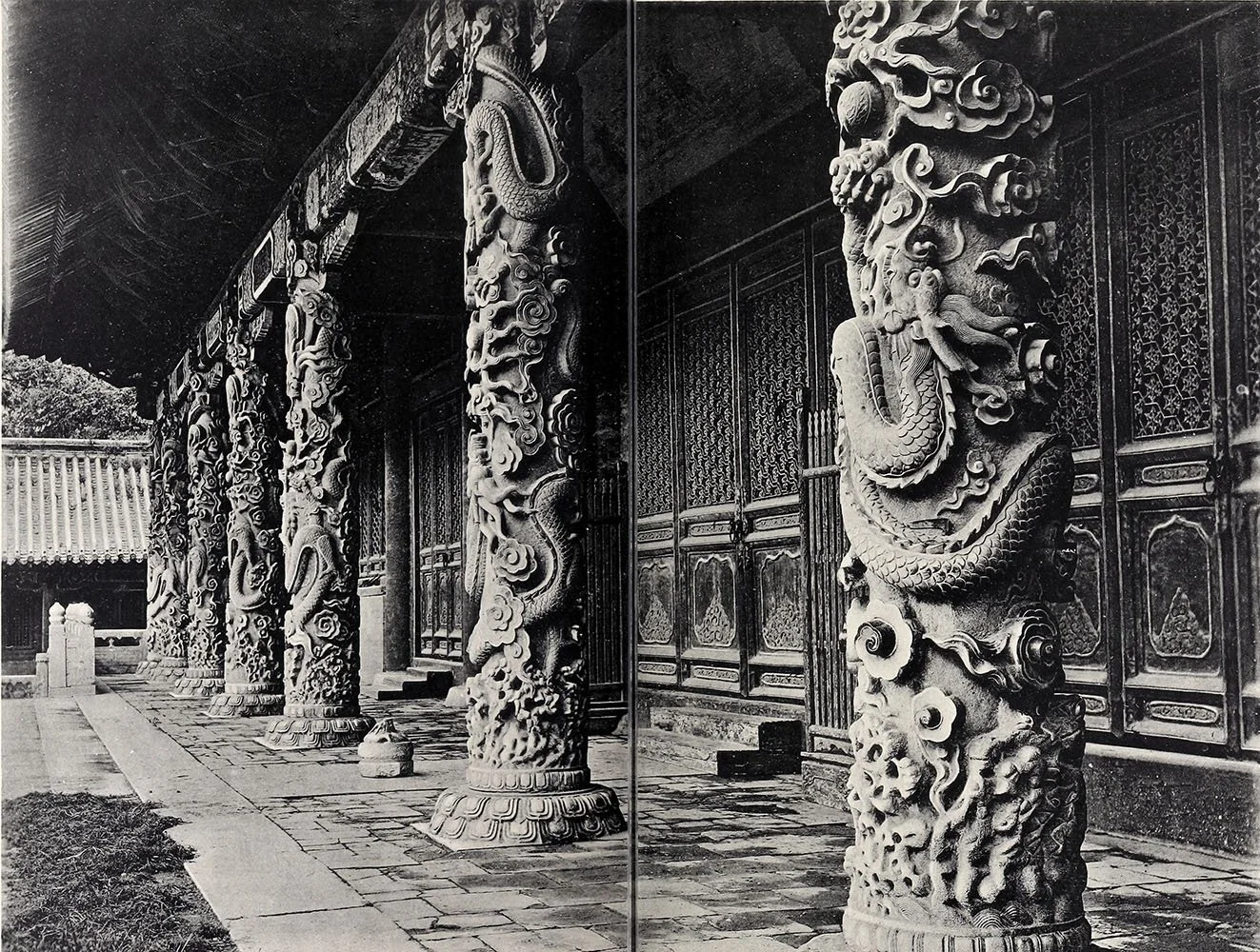
Temple of Confucius by Ernst Boerschmann, 1907. Public Domain.
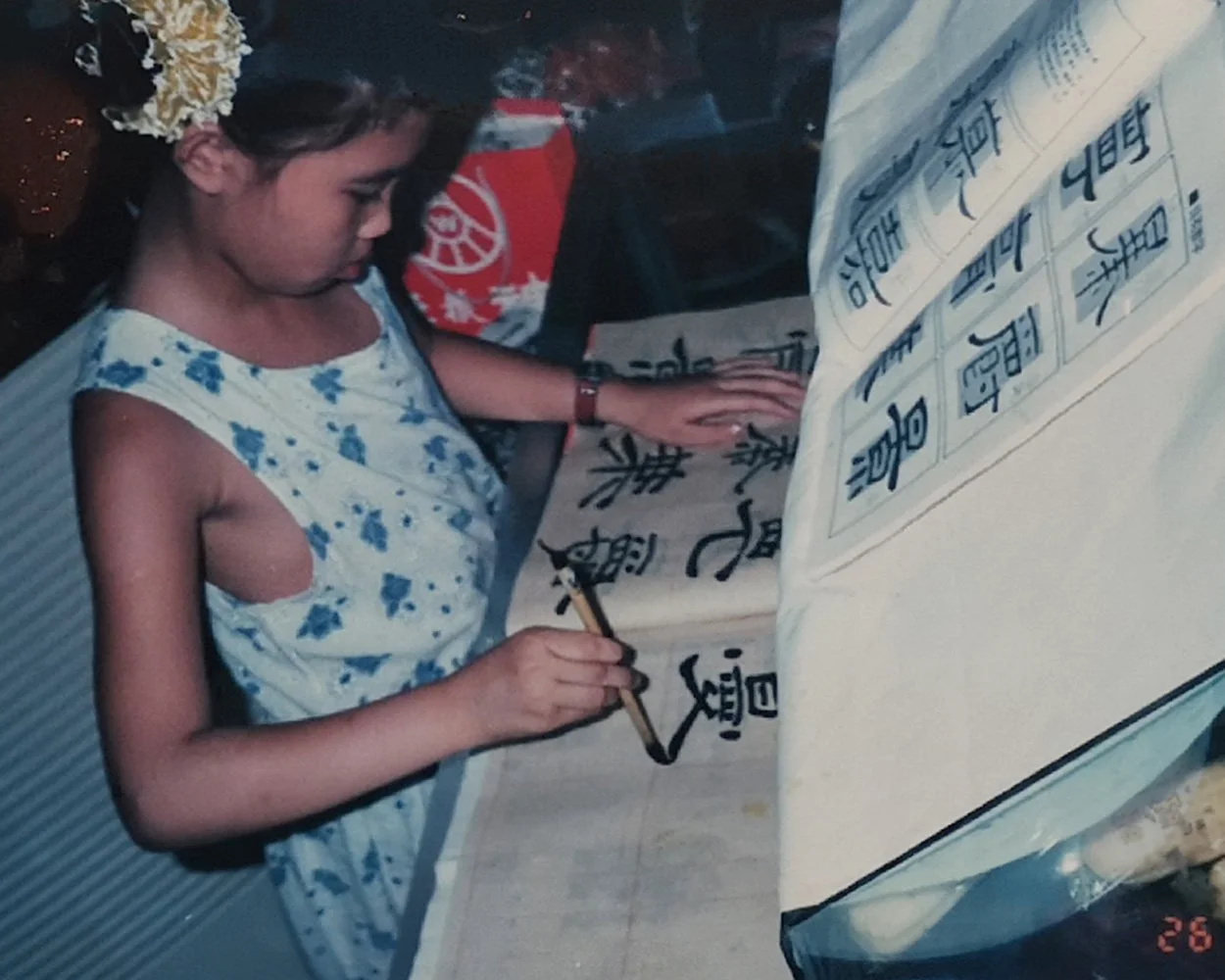
A young Marley Kong, captured by her father, 1998.
Statement
My work is dictated by the existential challenges to my training in Chinese calligraphy in face of the medium-diverse and conceptually-driven nature of contemporary art. Shaped by my immigrant experience, my removal from traditional calligraphy environments has prompted me to reexamine all aspects of the discipline, from materials to art historical and philosophical ideals. The erosion of calligraphy in my practice reflects an uncanny shift in my identity, where cultural tradition cedes in favour of the modern self. Yet, the role of tradition is never absolved entirely and co-exists with modernity in a state of uncertainty, conflict, and change.